
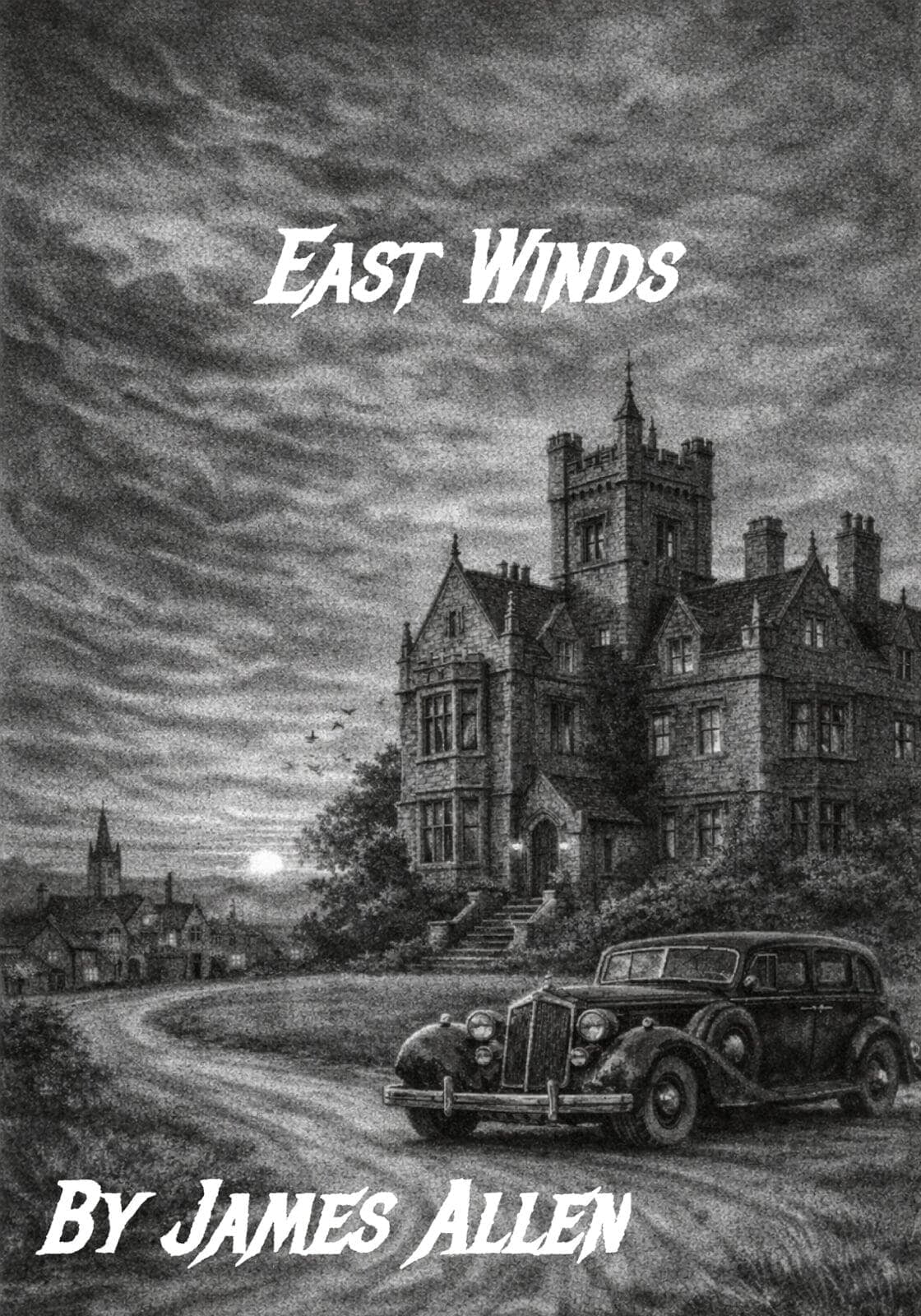
East Winds
Harrow House has been waiting for her.
When Eliza Harrow returns to England to settle her late aunt’s estate, she expects paperwork, dust, and a quick sale. Instead, she finds a decaying ancestral house that feels less abandoned than watchful—and a caretaker who speaks of its strange habits as though they were rules.
Silas Vane warns her to leave the east rooms closed, avoid the cellar, and fasten the shutters before dusk. He seldom lies outright, but his cautions are not explanations.
Then the walls begin to answer.
Old letters contradict official records. Childhood drawings contain figures no one remembers. Her aunt’s accounts reveal years of locks, shutter repairs, chalk, salt, and beeswax tapers. As Eliza searches deeper, she realizes Harrow House has not merely concealed its history.
It has edited it.
Names have been removed. Memories have been altered. A child has been forgotten.
To settle the estate, Eliza must confront what the house took, what her family chose to erase, and what Silas has spent a lifetime helping it keep. But some truths refuse to remain buried—and in Harrow House, what is named cannot be kept by silence.
East Winds is an atmospheric, character-driven gothic mystery about inheritance, memory, family guilt, and an old house that has outlived everyone who believed they possessed it.
How East Winds Began
East Winds did not begin as East Winds.
Its first spark became a shorter work titled No Wind That Blows from the East. That book explored the original idea, but the story continued to grow beyond what that version could comfortably hold.
There were characters who deserved more room, relationships that needed time to develop, and parts of the story that wanted to go somewhere the original work had never been intended to take them.
Eventually, it became clear that this was no longer a matter of simply expanding the earlier book. The story needed to be reconsidered and rebuilt as something larger.
That became East Winds.
No Wind That Blows from the East has since been archived in favor of East Winds, which now represents the complete version of the story.
Sometimes a first idea becomes the finished work.
Sometimes it simply shows you which way the wind is blowing.