
- Publisher : All En Crafts LLC Press
- Language : English
- Print length : 166 pages
- Available in
Paper Cover
Hard Cover
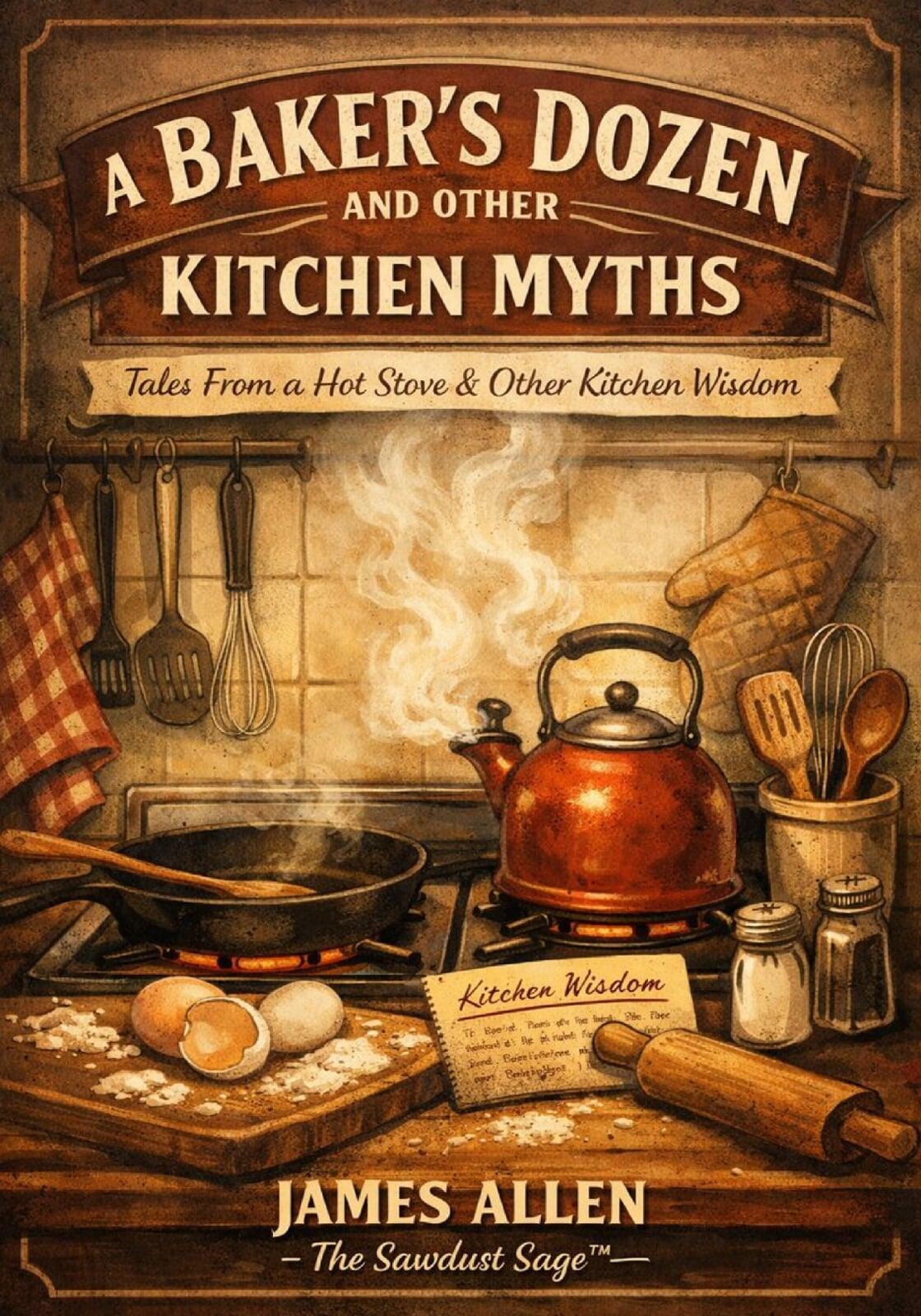
A Baker’s Dozen and Other Kitchen Myths
Tales From a Hot Stove & Other Kitchen Wisdom
This is not a cookbook, and these pieces are not recipes. They’re observations—served warm, occasionally salted, and frequently dipped in humor.
Every kitchen runs on myths.
Some are passed down like family recipes. Some arrive laminated, frozen, or “market tested.” Others settle in quietly, wrapped in habit and handed down as wisdom.
A Baker’s Dozen and Other Kitchen Myths is a collection of short poems and reflections about the everyday beliefs we cook by—food, convenience, tradition, identity, and the small compromises that find their way onto the plate.
With humor, observation, and a steady hand at the stove, James Allen, writing as The Sawdust Sage™, looks at why menu photos never quite resemble the meal, how convenience often sends the bill later, and what the foods that raised us continue to teach long after the dishes are done.
These are not recipes. They are observations—served warm, occasionally salted, and frequently dipped in humor.
Inside are wry takes on processed food, shortcuts, and culinary illusions; reflections on family meals, regional habits, and inherited tastes; gentle satire aimed at modern convenience culture and kitchen “truths”; and quieter pieces about comfort, belonging, memory, and care.
This is a book for readers who enjoy smart humor, honest reflection, and the small bits of philosophy hiding in ordinary places. If you have ever trusted the picture on the menu, waited too long for the fryer, argued about the proper way to make a family dish, or learned something important standing over a stove, you will probably recognize yourself here.
No substitutions required.
The Origin of A Baker’s Dozen and Other Kitchen Myths
The spark for this book came from an old Lutheran cookbook my mother gave me.
Flipping through it got me thinking about the way food carries stories, habits, traditions, and assumptions from one generation to the next. That led to a simple question: Why is a baker’s dozen thirteen?
One kitchen question led to another. Before long, I was thinking about convenience foods, family recipes, menu promises, regional habits, inherited tastes, and all the little “truths” we accept because somebody has always done it that way.
Those questions became observations, and those observations became poems and short reflections.
A Baker’s Dozen and Other Kitchen Myths grew out of that chain of curiosity—starting with a family cookbook, wandering through a bit of food history, and ending up with a collection about what kitchens teach us when we pay attention.